Magnetic Beads in Biotechnology: Types, Applications and Why They Are Essential in Modern Research
Explore magnetic beads in biotechnology, their different types, DNA and RNA extraction, protein purification, cell isolation and applications in molecular biology
Discover how magnetic beads transform DNA and RNA extraction, protein purification, cell isolation and molecular biology workflows through efficient magnetic separation technology.
Magnetic beads have become indispensable tools in modern biotechnology. From DNA extraction and RNA purification to protein isolation and cell separation, these microscopic particles help researchers capture, isolate and purify specific biological targets with precision and efficiency. Their ability to respond to an external magnetic field makes complex laboratory procedures simpler, faster and easier to automate.
1. What Are Magnetic Beads in Biotechnology?
Magnetic beads are microscopic particles containing magnetic materials, most commonly iron oxides such as magnetite (Fe3O4) and maghemite (γ-Fe2O3). They are engineered with protective coatings and functional surface groups that allow them to interact with specific biological molecules.
Depending on their design, magnetic beads can bind DNA, RNA, proteins, antibodies, antigens, cells and other biological targets. When a magnetic field is applied, the beads move toward a magnetic separator, allowing researchers to collect the target material while removing unwanted components from the sample.
2. How Do Magnetic Beads Work?
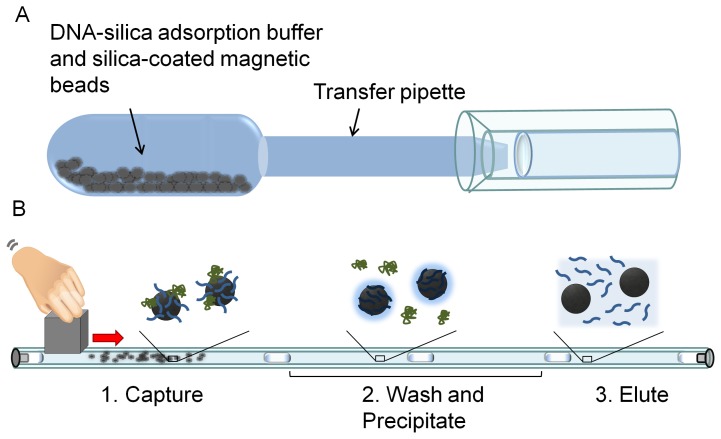
Magnetic bead separation is based on the interaction between magnetic particles and an external magnetic field. Their surfaces are designed to capture selected biological targets through chemical interactions or specific molecular recognition.
A typical magnetic bead purification workflow includes five main steps:
Sample preparation
The biological sample is prepared under appropriate buffer conditions to make the target molecules available for binding.
Target binding
Magnetic beads interact with the target DNA, RNA, protein or cell through their functionalized surfaces.
Magnetic separation
A magnetic separator attracts the beads to the side or bottom of a vessel, separating them from the surrounding liquid.
Washing and purification
Unwanted substances are removed through washing while the target remains associated with the beads.
Target recovery
The purified biological material is released using an appropriate elution solution or recovered through the required downstream procedure.

3. What Are the Different Types of Magnetic Beads?
Magnetic beads are available in several forms. They can be classified according to their magnetic core, surface coating, chemical functionality and biological recognition properties. These categories can overlap: for example, a streptavidin-coated bead can also have a polymer coating and an iron oxide magnetic core.
A. Superparamagnetic Beads
Superparamagnetic beads are among the most widely used particles in molecular biology and biotechnology. They respond to an applied magnetic field and can be rapidly collected during separation procedures.
They are particularly useful for:
- DNA and RNA purification.
- Protein isolation and purification.
- Cell separation and enrichment.
- Automated sample preparation.
- Molecular biology and sequencing workflows.
B. Streptavidin Magnetic Beads
Streptavidin magnetic beads are functionalized with streptavidin, a protein that binds strongly to biotin. This interaction is widely used to capture biotinylated molecules, including proteins, antibodies, oligonucleotides and nucleic acid probes.
Common applications include:
- Biotinylated protein purification.
- DNA and RNA capture.
- Immunoprecipitation.
- Target enrichment in molecular biology.
- Next-generation sequencing preparation.
C. Carboxyl Magnetic Beads
Carboxyl-functionalized magnetic beads contain carboxylic acid groups on their surfaces. These groups provide useful chemical sites for biomolecule attachment and are commonly employed in nucleic acid purification and protein immobilization workflows.
Carboxyl magnetic beads are especially important for:
- DNA purification and size selection.
- RNA purification protocols.
- Protein coupling and immobilization.
- Biomolecule capture and sample preparation.
D. Silica-Coated Magnetic Beads
Silica-coated magnetic beads combine a magnetic core with a silica-based surface. Their surface chemistry supports nucleic acid binding under appropriate salt and buffer conditions.
They are frequently used in:
- Genomic DNA extraction.
- Total RNA purification.
- Plasmid DNA isolation.
- Viral nucleic acid purification.
- High-throughput molecular analysis.
E. Antibody-Coated Magnetic Beads
Antibody-coated magnetic beads are designed for selective capture of biological targets. Antibodies attached to the bead surface recognize specific antigens, allowing researchers to isolate particular proteins, cells or other target structures.
Applications include:
- Immunoprecipitation (IP).
- Co-immunoprecipitation (Co-IP).
- Cell isolation and enrichment.
- Protein interaction studies.
- Antigen capture and immunological research.
F. Protein A and Protein G Magnetic Beads
Protein A and Protein G magnetic beads are designed to capture immunoglobulins through interactions with antibody Fc regions. They are widely used in antibody purification and immunoprecipitation workflows.
Researchers use these beads for antibody capture, protein complex isolation, immunoprecipitation and the investigation of protein-protein interactions.
G. Amine-Functionalized Magnetic Beads
Amine-functionalized beads contain amino groups on their surfaces. These groups can be used for chemical coupling and immobilization of selected biological molecules through suitable conjugation chemistry.
They are useful for protein immobilization, ligand attachment, biomolecule coupling and the development of specialized bioassays.
H. Tosyl-Activated and Epoxy-Functionalized Magnetic Beads
These beads contain reactive surface groups designed for covalent attachment of proteins, antibodies, enzymes and other ligands.
They are valuable in custom bead functionalization, affinity purification, assay development and specialized biotechnology applications.
I. Magnetic Nanoparticles
Magnetic nanoparticles are nanoscale magnetic materials that can be incorporated into different particle systems. Their small dimensions and large surface-area-to-volume ratio make them interesting for advanced separation technologies, biosensing and microfluidic applications.
They are increasingly investigated in nanobiotechnology, biosensor development, molecular detection and targeted biomolecule capture.
J. Oligo(dT) Magnetic Beads
Oligo(dT) magnetic beads contain thymidine-rich oligonucleotide sequences that hybridize with the poly(A) tails of eukaryotic messenger RNA molecules.
They are particularly important for:
- mRNA isolation from total RNA.
- Transcriptomics research.
- RNA sequencing preparation.
- Gene expression analysis.
- cDNA library construction.
4. Comparison of Different Magnetic Bead Types
| Magnetic bead type | Surface characteristic | Main applications |
|---|---|---|
| Superparamagnetic | Magnetically responsive particles | DNA, RNA and protein purification |
| Streptavidin-coated | Streptavidin-biotin interaction | Biomolecule capture and enrichment |
| Carboxyl-coated | Carboxylic acid groups | Nucleic acid purification and coupling |
| Silica-coated | Silica surface | DNA and RNA extraction |
| Antibody-coated | Specific antibody recognition | Cell and protein isolation |
| Protein A/G | Immunoglobulin binding proteins | Antibody capture and IP |
| Amine-functionalized | Amino groups | Biomolecule immobilization |
| Oligo(dT) | Thymidine oligonucleotides | mRNA isolation |
| Epoxy / Tosyl activated | Reactive chemical groups | Covalent biomolecule coupling |
| Magnetic nanoparticles | Nanoscale magnetic materials | Biosensors and nanobiotechnology |
5. Why Are Magnetic Beads So Important in Biotechnology?
The importance of magnetic beads comes from their ability to simplify the isolation and purification of biological materials. Many laboratory experiments require highly purified samples before researchers can perform sequencing, amplification, protein analysis or other downstream investigations.
Improved purification
Functionalized surfaces help capture selected molecules while unwanted sample components can be removed during washing.
Time-efficient workflows
Magnetic separation reduces dependence on several conventional separation steps, depending on the application.
Automation compatibility
Magnetic bead protocols can be integrated into automated liquid-handling and high-throughput laboratory platforms.
Sample flexibility
Different bead chemistries support work with complex biological samples and diverse target molecules.
Reproducible procedures
Well-optimized magnetic bead protocols can provide consistent sample processing and purification performance.
Scalable technology
Magnetic separation can be adapted to small research samples and larger bioprocessing workflows.
6. Applications of Magnetic Beads Across Biotechnology
DNA Extraction and Purification
Magnetic beads are widely used to isolate genomic DNA, plasmid DNA and other nucleic acid fragments. Depending on the bead chemistry and buffer composition, DNA can bind to the bead surface, be separated magnetically, washed and subsequently eluted.
RNA Isolation and Purification
RNA purification is essential for transcriptomics, gene expression studies and molecular biology research. Magnetic beads, including silica-based and oligo(dT)-functionalized formats, support total RNA purification and selective mRNA enrichment.
Protein Purification
Protein-binding magnetic beads allow researchers to isolate specific proteins from complex biological mixtures. Affinity ligands, antibodies and other binding molecules can be immobilized on bead surfaces to facilitate selective capture.
Cell Isolation and Separation
Antibody-functionalized magnetic beads can recognize specific cell surface markers. This enables positive selection, negative selection and enrichment of selected cell populations for further investigation.
Immunoprecipitation and Protein Interaction Studies
Magnetic beads are valuable in immunoprecipitation and co-immunoprecipitation experiments, helping researchers investigate protein expression, protein complexes and molecular interactions.
Next-Generation Sequencing (NGS)
Magnetic beads support multiple stages of NGS library preparation, including nucleic acid purification, fragment size selection and cleanup. They contribute to efficient processing of sequencing samples.
Microfluidics and Lab-on-a-Chip Technologies
Magnetic particles can be manipulated within microfluidic systems using controlled magnetic fields. This approach supports miniaturized sample preparation, automated separation and integrated molecular analysis.
Biosensors and Molecular Detection
Functionalized magnetic nanoparticles are also being developed for biosensing. By combining specific recognition molecules with magnetic separation and detection systems, researchers can improve target enrichment and analytical sensitivity.
7. Magnetic Beads vs. Traditional Separation Methods
Traditional laboratory purification approaches include centrifugation, filtration and column-based separation. Magnetic bead technology provides an alternative that can offer practical advantages depending on the sample and research application.
| Feature | Magnetic bead methods | Traditional approaches |
|---|---|---|
| Separation mechanism | External magnetic field | Gravity, pressure or centrifugal force |
| Automation | Highly adaptable | Depends on the method |
| Sample handling | Flexible in many formats | Often requires specific equipment |
| High-throughput processing | Suitable for parallel workflows | Method dependent |
| Purification selectivity | Can be ligand-specific | Depends on separation chemistry |
8. How to Choose the Right Magnetic Beads for Your Research
Selecting the appropriate magnetic beads is important for obtaining reliable experimental results. Researchers should consider several characteristics before choosing a bead system.
- Target molecule: Determine whether the objective is DNA, RNA, protein, antibody or cell isolation.
- Surface chemistry: Choose carboxyl, silica, streptavidin, antibody, amine or other functionalized surfaces according to the binding mechanism.
- Particle size: Consider particle diameter, surface area and magnetic response.
- Binding capacity: Evaluate the amount of target material that can be captured.
- Sample compatibility: Ensure that the beads and associated buffers are appropriate for the sample.
- Purity and recovery: Consider binding efficiency, nonspecific interactions and target recovery.
- Automation requirements: Check compatibility with magnetic separators and automated extraction platforms.
9. The Future of Magnetic Bead Technology
Magnetic bead technology continues to evolve alongside advances in molecular biology, nanotechnology and biotechnology. Researchers are investigating improved surface functionalization, more selective binding systems, advanced magnetic nanoparticles and innovative separation platforms.
Emerging research areas include:
- Smart magnetic nanomaterials for biosensing.
- Microfluidic magnetic separation systems.
- Automated nucleic acid extraction platforms.
- Advanced protein purification technologies.
- High-throughput molecular biology workflows.
- Functionalized magnetic particles for environmental biotechnology.
These developments could further expand the use of magnetic separation in scientific research, bioprocessing and advanced analytical technologies.
Conclusion: Why Magnetic Beads Matter in Modern Biotechnology
Magnetic beads are much more than simple laboratory particles. They are versatile separation tools that support essential biotechnology workflows, including DNA extraction, RNA purification, protein isolation, cell separation, immunoprecipitation and sequencing preparation.
Through their magnetic properties and adaptable surface chemistry, they help researchers improve sample preparation, streamline laboratory procedures and develop more efficient analytical methods.
As molecular biology and biotechnology continue to advance, magnetic bead technologies will remain important components of modern scientific research.
10. Frequently Asked Questions About Magnetic Beads
What are magnetic beads used for in biotechnology?
They are used for isolating and purifying DNA, RNA, proteins, antibodies and cells through magnetic separation.
What are magnetic beads made of?
They typically contain a magnetic iron oxide core, such as magnetite or maghemite, surrounded by a polymer, silica or other protective coating.
What is the difference between magnetic and superparamagnetic beads?
Superparamagnetic beads are a particular class of magnetic particles that respond to an external magnetic field but have negligible residual magnetization after its removal.
Which magnetic beads are best for DNA extraction?
Silica-coated and appropriately functionalized carboxyl magnetic beads are commonly used for DNA purification. The best option depends on the sample and extraction protocol.
Are magnetic beads used for RNA extraction?
Yes. Magnetic beads are used for total RNA purification and selective mRNA isolation, including oligo(dT)-based capture.
What are streptavidin magnetic beads used for?
They capture biotinylated molecules through the strong streptavidin-biotin interaction and are used in protein isolation, nucleic acid capture and molecular biology assays.
Can magnetic beads be used for protein purification?
Yes. Protein A/G, antibody-coated, streptavidin and other affinity-functionalized beads can support selective protein capture and purification.
Why are magnetic beads useful in automated laboratories?
They can be manipulated using magnetic separators, making them suitable for automated sample preparation, parallel processing and high-throughput workflows.
Scientific References and Further Reading
1. Magnetic Separation in Bioprocessing Beyond the Analytical Scale: From Biotechnology to the Food Industry. Frontiers in Bioengineering and Biotechnology.
Read the scientific review2. Fundamentals and Application of Magnetic Particles in Cell Isolation and Enrichment.
Read the research article3. Magnetic Particles for the Separation and Purification of Nucleic Acids.
Read the scientific review4. Bio-On-Magnetic-Beads (BOMB): Open Platform for High-Throughput Nucleic Acid Extraction and Manipulation.
Read the research article5. Roles of Nanomagnetic Beads on Biosensing: From Fabrication to Application (2025).
Read the research review